Writing Class Radio
Podcast Episodes
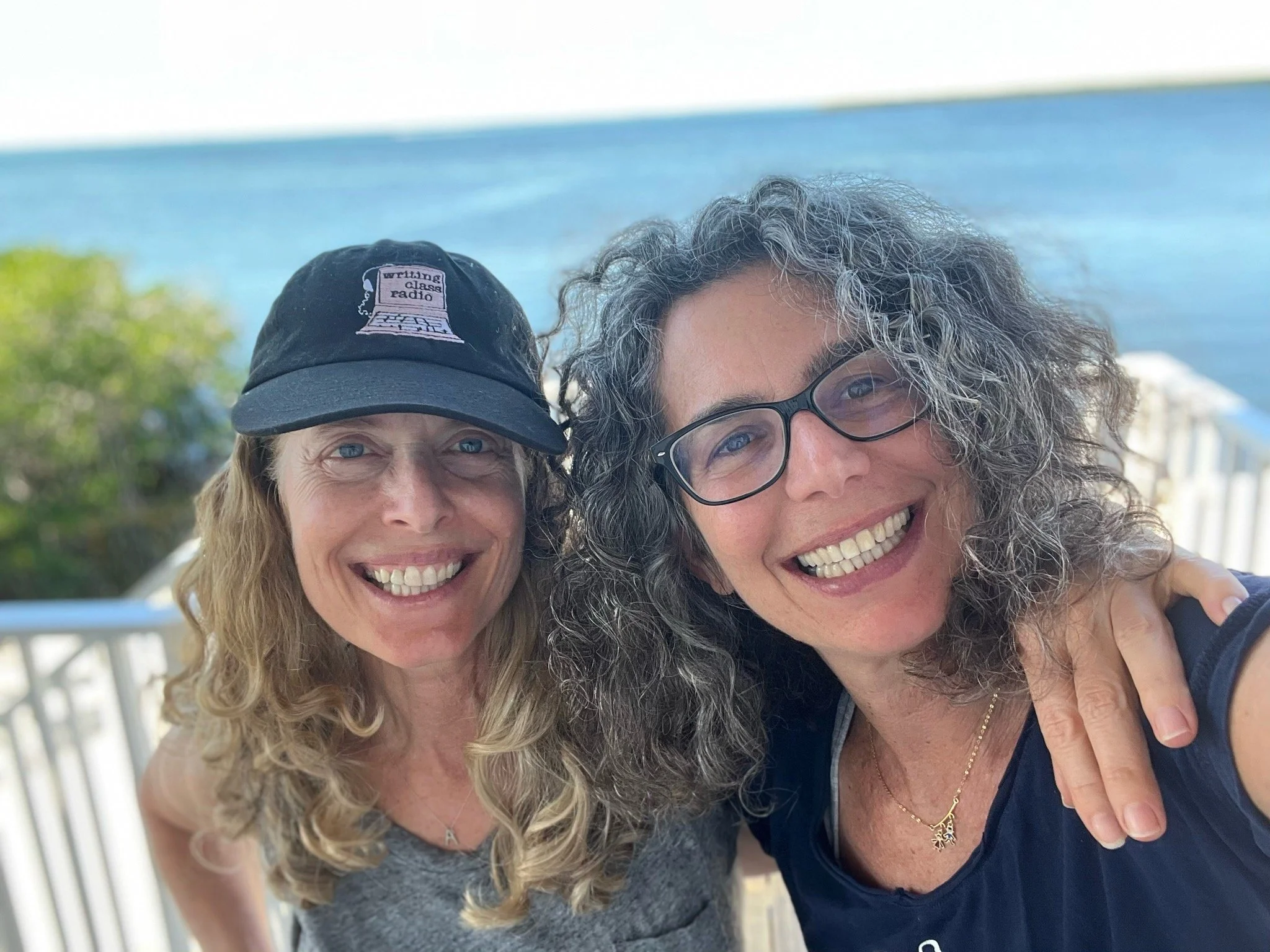
Allison Langer and Andrea Askowitz at Key Largo retreat 2023
Writing Class Radio has more than 200 award winning podcast episodes with true personal stories and writing tips. Hosts Allison + Andrea also offer private and group writing classes to help bring the personal into your writing.
If you have time and energy and don’t mind rude language and rough subjects, my daughter, Andrea, has a podcast. She and Allison teach memoir, so all kinds of personal stories get told. It's called "Writing Class Radio."
—Bonnie Askowitz
EPISODES
Full transcript of the episodes are available. Click here to access.
We have decided to pause production of new podcast episodes for now.
Live online writing classes are still available Mon + Tues 12-1pm ET and Tips Clinic every 2nd Saturday of the month.
During the summer of 2025, we ran some of our favorite episodes of all times.
Please click HERE to listen to episodes 207-212.
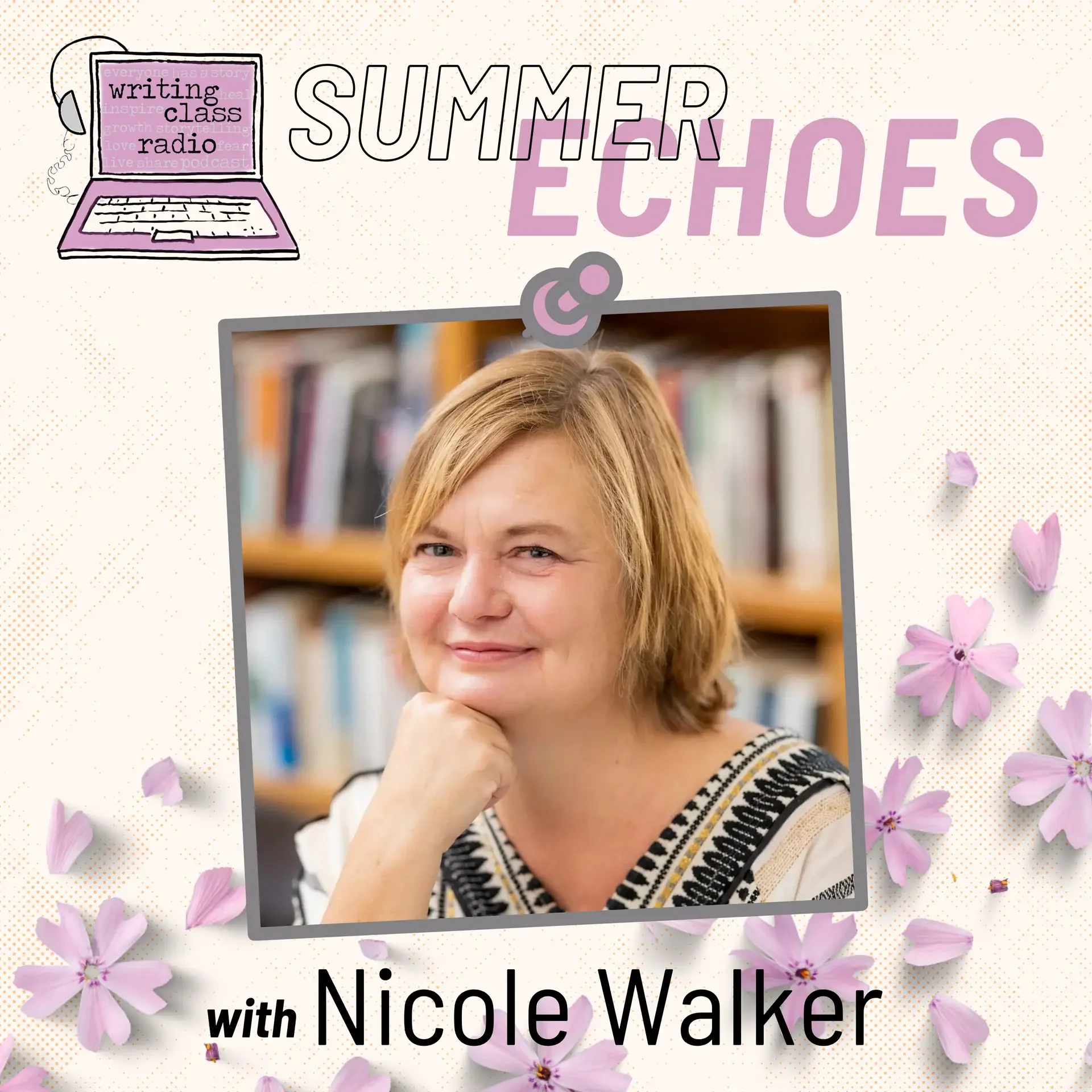
Aug. 26, 2025
212: My Abortion at 11 Wasn’t a Choice. It Was My Life
We flashback to the final story in a 7-part series in support of reproductive rights. The stories in the series were told live on stage in front of 400 people at Temple Beth Am in Miami, Florida on September 5th 2024.
Aug. 12, 2025
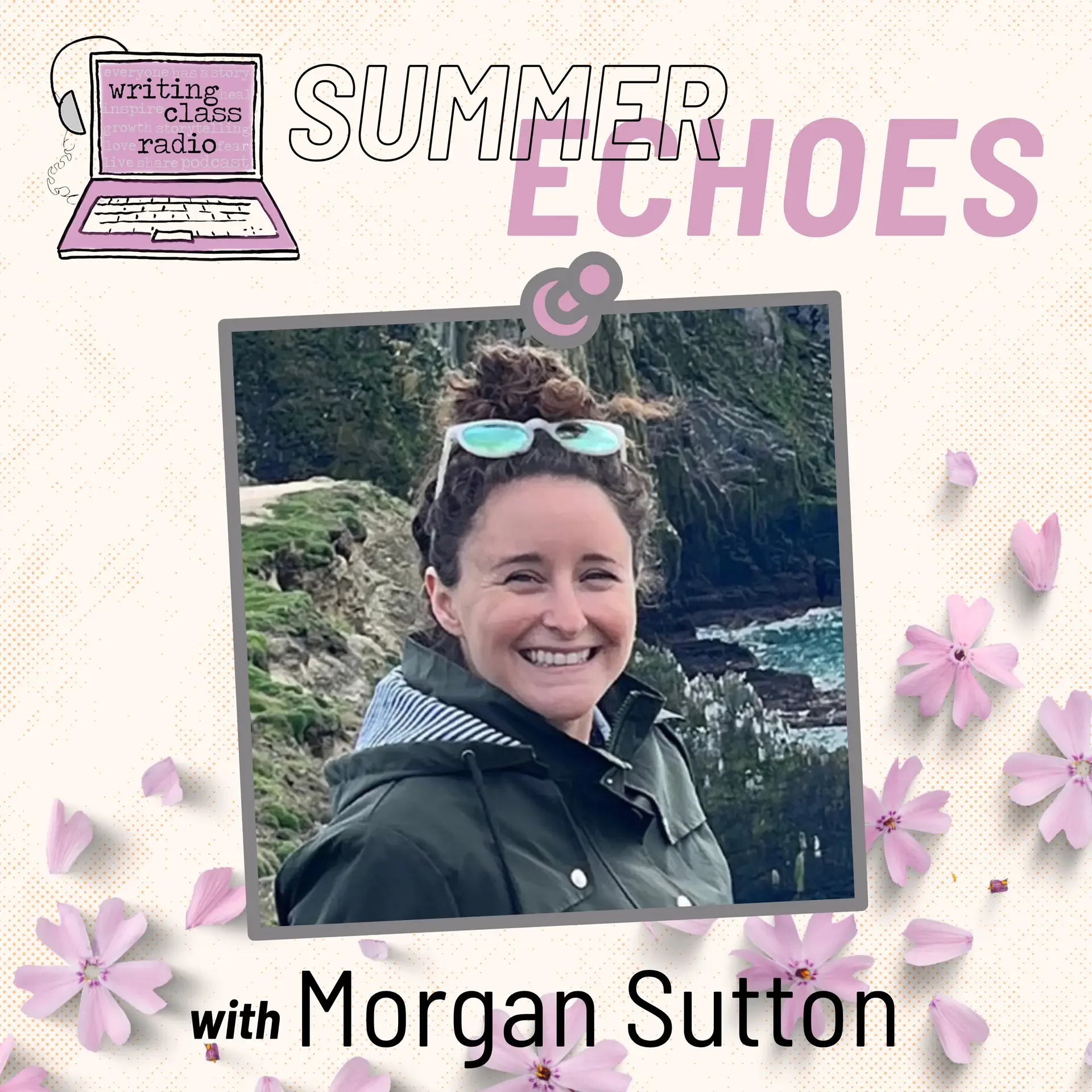
211: Is It Rape If You Were Blackout Drunk
Originally published on April 2 of 2024, we bring you a story by Morgan Sutton that embodies everything a story should embody. The story uses no extra words; the narrator looks inside herself; and the story matters to the broader world.
July 29, 2025
210: Birds Will Be Birds
We look back on a story by Christopher Blackwell. Chris is 42 and serving a 45-year prison sentence in Washington. Chris’ story came to us through writer and Chris’s mentor, Jamie Beth Cohen. This episode is about taking a small moment and bringing big meaning. Through details and emotion, Chris te…
July 15, 2025
209: How to Write about Life When Everyday Is a Reminder of Death?
Originally published in November of 2023, we are talking about hot topic/cold prose and when and why to write in the present tense vs. past. The story we share is written in the present tense, which gives readers the feeling that they're going through the situation with the narrator, in real time.
July 1, 2025
208: The Most Unique Essay We've Ever Aired
Today we continue the Summer Echoes Series with a story by Kimberly Elkins . Kimberly is the author of the novel, WHAT IS VISIBLE , which was a New York Times Book Review Editors' Choice and named to several Best of 2014 list...
June 17, 2025
207: A Psychiatric Hospital Nearly Ruined My Life
This episode is about how to write a near perfect essay. The story was written by Banning Lyon who writes about a harrowing childhood experience in a psychiatric ward. His essay was previously published in The Washington Post. After we discuss Banning’s story, you’ll hear an interview with the auth…
Episode 206: Does Anyone Care About Saving Fossil Creek? Learn How Your Writing Can Build Trust
Today we bring you another story told live on stage at the Flagstaff Festival of Science in September 2024. This story is by Dr. Jane Marks. Her story is called Saving Fossil Creek. What's cool about this story is how expertly the narrator weaves the personal in with the science. THAT is how a narrator builds trust. It's how listeners understand how their actions impact the greater world. It's how we, as a society, will change our behaviors because the information becomes more than just statistics. The personal draws us in so we begin to trust one scientist at a time.
Three years ago, we were hired by Dr. Jane Marks and Dr. Bruce Hungate, two famous ecologists from ECOSS Center for Ecosystem Science and Society (ECOSS) at Northern Arizona University. at Northern Arizona University. They heard our podcast and then started taking our classes which led to the idea that their students would benefit from taking our classes. So we’ve been doing online workshops and in-person workshops to help these scientists personalize their stories. The stories are amazing. I have learned so much about science through their stories in a way that brings me in.
This is our second year collaborating with the The scientists are so smart and they are trying to save our planet and we get to help them reach more people by personalizing their message.
You can also watch us on YouTube.
Dr. Jane Marks, is a conservation ecologist and professor of Aquatic Ecology at Northern Arizona University (NAU). She was featured as the lead scientist in the PBS documentary, A River Reborn: The Restoration of Fossil Creek, narrated by actor Ted Danson and she co-produced the video documentary Parched: The Art of Water in the Southwest. For more Jane Marks, go to https://ecoss.nau.edu/team/jane-marks/. Also, check out her previous episodes: Episode 149: "How to Make Your Writing More Personal in any Field and Episode 167: "Even Though I'm Judging You, Don't Judge Me for Being a Chopper Mom.”
Episode 205: How Are Jumping Rope and Tornadoes Related? A Braided Essay
Today on our show, we bring you a story by Andrea Askowitz called A Numbers Game. This story was previously published in First Person Singular. It was also read live on stage at the Flagstaff Festival of Science in 2024. A Numbers Game is a braided essay. So, In this episode, we will discuss the braided essay and how Andrea’s came to be. Just a hint: Nicole Walker had something to do with it!
You can also watch us on YouTube.
More about how we became associated with the Flagstaff Festival of Science…Three years ago, we were hired by Dr. Jane Marks and Dr. Bruce Hungate, two famous ecologists from the Center for Ecosystem Science and Society (ECOSS) at Northern Arizona University. They heard our podcast and then started taking our classes which led to the idea that their students would benefit from taking our classes. So we’ve been doing online workshops and in-person workshops to help these scientists personalize their stories. This story was written during our second year collaborating with ECOSS.
Episode 204: I Wish I Had Been Nicer to You Before You Died
This episode showcases an excellent essay that uses the letter form (epistolary) while making sure not to telegraph. If you don’t know what telegraphing is, don’t worry. You will after you hear our discussion at the end. The story you will hear was written by one of our favorite students, Danielle Huggins. This is the 4th time Danielle’s been featured on the podcast but the first time she joined us in the virtual studio. We recorded for the podcast as usual, but now you can also watch us on YouTube. Danielle’s essay is titled A Letter to My Sister: I’m Sorry.
Danielle Huggins is a writer from Northern New Jersey. She has been published in the Washington Post, Mutha Magazine, and GoMAG.com. She is a frequent contributor to Writing Class Radio. Danielle has taken First Draft, Second Draft, Final Draft, and Memoir. She is currently working on a memoir and attends First Draft Class as often as she can. She is on TikTok under @bipolardanielle and lives with her husband, daughter, mother, a wire fox terrier, and Sadie Cat.
If you loved this story and want more Danielle, you can listen to Episode 105: Teach us Something We Don’t Know. Episode 139: This is What Mania Looks Like. And Episode 152: How Music Inspires Storytelling.
Episode 203: I Lied About My Birth Experience. Writing Helped Me Work Out My Sh*t and Get to the Truth.
Today on our show, we bring you a story by Rachel Perse, who had severe anxiety after giving birth to her first child, but pretended she was having the time of her life. She tells her important story and then talks to us about how she used writing to get to the truth. And to work out her shit around becoming a new mother.
Rachel was Andrea and Allison in the studio during recording, and you can watch us on YouTube. Rachel Perse’s story is called The Lies I Told About Motherhood.
Rachel Perse is a stay-at-home mom to her 8-month-old son and two dogs. She is a proud older sister, alumna of Emory University, former assistant dean of students at the University of Miami, public health educator, and now, writer.
Episode 202: When Anxiety is a Superpower
Today you will hear another story told live on stage at the Flagstaff Festival of Science in September 2024. This story is by Emma Lathrop and is about her anxiety. This quality she thought was hindering her turned out to be something she now values.
Two years ago, we were hired by Dr. Jane Marks and Dr. Bruce Hungate, two famous ecologists from ECOSS at Northern Arizona University. They heard our podcast and then started taking our classes which led to the idea that their students would benefit from taking our classes. So we’ve been doing online workshops and in-person workshops to help these scientists personalize their stories. The stories are amazing. I have learned so much about science through their stories in a way that brings me in.
Emma Lathrop, is a PhD candidate in ECOSS at Northern Arizona University.
This is our second year collaborating with the Center for Ecosystem Science and Society (ECOSS) at Northern Arizona University. The scientists are so smart and they are trying to save our planet and we get to help them reach more people by personalizing their message. Today’s storyteller,
Episode 201: What Can You Learn by Watching How Trees Recover from Fire?
Today we bring you a story told by Megan Quinn live at the Flagstaff Festival of Science in September 2024. Megan’s essay reveals her eating disorder and how she’s been healing from that…much like burned trees heal from high intensity wild fires.
We’re talking about making a connection from your personal life to what we study. We’re also talking about being vulnerable. Because everyone will love you more. We promise.
Megan Quinn is a master’s degree student in the biology department at NAU.
This is our second year collaborating with the Center for Ecosystem Science and Society (ECOSS) at Northern Arizona University. Two years ago, we were hired by Dr. Jane Marks and Dr. Bruce Hungate, two famous ecologists from ECOSS. They heard our podcast and then started taking our classes which led to the idea that their students would benefit from taking our classes. So we’ve been doing online and in-person workshops to help these scientists personalize their stories. The stories are amazing. We have learned so much about science through their stories in a way that brings us in.
Episode 200: When is a Gift More than a Gift?
This episode launches on Christmas day, so we are re-running a story by Emily Henderson titled After Our Son Died, My Husband Gave Me The Most Meaningful Christmas Gift Of My Life. Emily workshopped this essay in our Final Draft class and then the Huffington Post published it on December 25, 2021. This story is an excellent example of using an object to convey emotion, details, and telling in addition to showing. Emily tells us how she’s feeling the entire story which intensifies vulnerability. To hear another of Emily’s stories, listen to Episode 103: Writing the Same Story Over and Over and Episode 160: Cliches Saved My Life.
Emily Henderson is a runner and writer living in Santa Barbara, California. Her essays have appeared in Scary Mommy, the Santa Barbara Independent, Huffington Post, and Writing Class Radio. Emily is currently writing a memoir about processing the loss of her son while running every street in her city. You can follow her on Instagram at @emilykathleenwrites or visit https://substack.com/@emilyhenderson
Episode 199: The Passing of Sorrow
Today on our show, we bring you a story by Dana Shavin who submitted her essay to the podcast. When it came in, we were blown away. The writing is so smart and well-crafted. In this episode, we talk about the difference between situation and story and we also discuss why callbacks are effective.
Dana Shavin is an award-winning humor columnist for the Chattanooga Times Free Press, and the author of a memoir, The Body Tourist and the collection of essays, Finding the World: Thoughts on Life, Love, Home and Dogs. Her essays and articles have appeared in The Sun, Oxford American, Garden and Gun, Travel + Leisure, Alaska Quarterly Review, Fourth Genre, Today.com, Appalachian Review, Psychology Today, Bark, The Writer, and others. You can find more at Danashavin.com, and follow her on Facebook at Dana Shavin Writes.
Episode 198: Why Do We Love Stories That Remind Us of Ourselves?
Today on our show, we bring you a story by Rachel Kramer Bussel. Her story was so relatable, that we realized sometimes we choose stories so we can just talk about ourselves. And that’s just what we do in this episode. We also talk about the narrator’s brilliance in drawing us in with just the right details.
Rachel Kramer Bussel (rachelkramerbussel.com) is an essayist and freelance writer specializing in books, culture, relationships, mental health, and feminism. She is the editor of Open Secrets Magazine (opensecretsmag.substack.com) and over 70 anthologies, and is the author of How to Write Erotica and Lap Dance Lust. Rachel's writing has been published in The New York Times, The Washington Post, Salon, The Village Voice, and other publications. She teaches essay writing classes online and is currently editing an anthology about our attachments to your belongings.
Episode 197: Shut the F*ck up, Please
Today on our show, we bring you a story by Sarena Neyman. Sarena is in Allison’s 2nd Draft class, which contains writers who come together to share a draft of their essay and receive feedback from the group. Sarena was previously published on Writing Class Radio. Episode 187: The Bigger Table: How I Lost My Husband But Gained a Bigger Family. In that episode, we discussed Sarena’s brilliant landings.
In this episode we will discuss landings again, because like last time, they are perfect. We will also talk about humor and details. This narrator is hilarious and so good at the highlighting little things.
Sarena Neyman has been writing for numerous human rights groups for more than 20 years, working on causes from digital privacy to affordable housing to marriage equality. She writes for cabinlife.com and PeaceVoice.com. Sarena lives in Western Massachusetts.
ABORTION SERIES: On September 18, 2024, we launched a series in support of a family’s reproductive rights—specifically Yes on 4, an amendment on the ballot in Florida to get rid of a near total abortion ban and reinstate the liberties under Roe v Wade. The stories in the series were told live on stage in front of 400 people at Temple Beth Am in Miami, Florida on September 5th 2024.
This event was produced and created by Writing Class Radio, Rabbi Greengrass at Temple Beth Am, and 19 collaborative partners: The Women’s Fund, Equal Justice Society, Cuban American Women Supporting Democracy, Men for Choice, Books and Books, Planned Parenthood, Temple Judea, Coral Gables United Church of Christ, Tikkun Olam at Temple Beth Am, Florida Women’s Freedom Coalition, Women’s Emergency Network, Sisterhood of Temple Beth Am, Catholics for Choice, Temple Israel, Women of Reform Judaism, All Angels Episcopal Church, RAC Florida, National Council of Jewish Women, The Workers Circle.
Episode 196: My Abortion at 11 Wasn’t a Choice. It Was My Life
The seventh and final story in Our Abortion Stories is by Nicole Walker whose story tells us everything we need to know about why she writes and why she wrote this story.
When Nicole wrote about her abortion at 11 years old in the New York Times, all the shame she carried for more than forty years melted away. This is why we write.
Nicole Walker is an English professor at Northern Arizona University and the author of 8 books. You can find Nicole on Facebook, Twitter @nikwalkotter, Instagram @nikwalker28, and her website nikwalk.com.
Episode 195: Florida’s Abortion Law Almost Killed My Wife
The sixth story in Our Abortion Stories is by Derick Cook who describes his wife’s near-death experience when doctors sent her home after her water broke at 16 weeks. Derick’s wife should have gotten an abortion right away, but because her fetus still had cardiac activity and she wasn’t yet on the verge of death, her doctor was afraid to offer common-sense care. This story is tragic, but it has a happy ending.
Derick Cook is a high school football champ, drummer, and guitar player. Because of what Derick’s wife went through, Derick has become an activist. He told us he wants to write a book. Find Derick on Facebook.
Episode 194: A Physician's Duty
The fifth story in Our Abortion Stories series is by Dr. Cecilia Grande, an OB-GYN in Miami, Florida.
Dr. Grande’s story is about how the current abortion laws are prohibiting her and her colleagues from giving standard care to her patients and tragically, women are dying. Dr. Grande lists the exceptions provided by the law, but walks us through why these exceptions are grossly inadequate and why even the exception for rape and incest does not protect rape victims unless they report their rape and can provide a court order. The exceptions, in short, are cruel.
Dr. Cecilia Grande has been a practicing OB-GYN physician in Miami for 30 years.
Episode 193: Another Try at a Better Life
The fourth story in Our Abortion Stories series is by Nilsa Ada Rivera.
Nilsa’s story shows what someone living on the street goes through when she learns she’s pregnant and wants to have a baby. In Nilsa’s case, the fetus had severe health problems and Nilsa had to make the hard decision to terminate the pregnancy. Nilsa is Catholic and until recently struggled with her decision. Ultimately she believes God is the only entity that can judge her.
For more Nilsa, listen to Episode 29 and Episode 107.
Nilsa Ada Rivera is a housing analyst and writer. Nilsa and I have been in writing groups together for about 15 years. She is coming out with her first book in 2025 about affordable housing. You can find Nilsa Rivera on Instagram @nilsawrites and Facebook.
Episode 192: A Letter to My Son About His Abortion
The third story in Our Abortion Stories series is by Matt Tente.
Matt’s story is in the epistolary form, which means it was told in the form of a letter. Matt comes with a perspective about how healthcare could be handled if we in Florida work hard enough to win Yes on 4. We found Matt’s story on HuffPost, where it was published in a longer form.
Matt Tente is a screenwriter and portrait photographer who came in from California where he lives with his wife and one-year-old son. You can find Matt on Instagram @matttenteheadshots.
Episode 191: The Shade of Our Grandmothers’ Trees
The second story in Our Abortion Stories series is by Nicole Crooks.
Nicole tells the story of sexual molestation and rape. Neither the abuse nor the rape were described, but there is mention of both. In Nicole’s story she grapples with reporting her rape and ultimately doesn’t, just as the women she counseled ultimately didn’t report theirs.
Nicole Crooks is a coach and consultant who is committed to black women’s well-being and building community. You can find Nicole on Instagram at @Iamnicolecrooks
Episode 190: Then and Now and Back to Then
Our first story in Our Abortion Stories series is by Liz Chifari.
Liz had two abortions. In 1970, before abortion was legal, Liz had to proclaim she was mentally ill to get an abortion. In 1997, when she thought she was in perimenopause and already had a family, she went to an abortion clinic. Her story is about how radically different her experiences were.
Liz Chifari is a retired Lawyer and law librarian. She lives in Miami. We asked Liz why she wrote this story and she said, “.... because it was time.”
Episode 189: I Found Connection Through a Tattoo of a Bee
Today on our show, we bring you a story by Jennifer Sizeland, who lives in Manchester, England. Her story is a great example of situation and story. It’s important to know the difference, and on this episode, Andrea and Allison will discuss why.
There is also something very special about this essay. It is a story of hope and connection after a tremendous loss. The situation, as described in the piece, is a public shooting which brings great sadness to the town of Manchester, England. The story, however, is about more than just this horrible situation. The story is about much much more.
Jennifer Sizeland is a freelance writer and assistant producer with 14 years of experience in the media industry. She has written for many publications including the BBC, the Independent, Metro, Manchester Mill, Fodor’s Travel, Gastro Obscura, Reader’s Digest, and Stylist. For more Jennifer Sizeland, go to her website Jennifersizeland.com. She lives in Manchester, England and you can follow her on Instagram at @lifeofsize.
Episode 188: Making Room for Hope after My Daughter Died
Today on our show, we bring you a story by Farida Taha. Farida writes about losing her daughter to cancer and how she’s moving forward.
We talk a lot about loss on our podcast, because writing is how so many people process grief. We believe writing opens the heart, clears the mind, and helps us understand and process. In this essay, Farida throws out some incredibly poignant lines that reveal intense pain and so much hope for the future.
Andrea and Allison will discuss the details Farida drops in early then calls back to later.
Farida Taha is a writer and mother of three. She is originally from New York City and resides in Miami, FL. She is an avid listener and former writing class radio student. You can find her on Instagram @faridae.
Episode 187: How I Lost My Husband But Gained a Bigger Family
Sarena Neyman has been writing for numerous human rights groups for more than 20 years, working on causes from digital privacy to affordable housing to marriage equality. She writes for cabinlife.com and PeaceVoice.com. Sarena lives in Western Massachusetts.
Today on our show, we bring you a story by Sarena Neyman. Sarena is in Allison’s 2nd Draft class, which is made up of writers who come together to share a draft of their essay and receive feedback from the group. The goal is to get published, and with the help of other writers, many students achieve this goal.
Sarena’s story is an insane example of humor and voice and perfect landings. This essay is masterfully created and delightful to hear. It is also a unique take on two complex situations: divorce and sexuality. In this episode, listeners will hear how one family dealt with dissolution without dissolving the love.
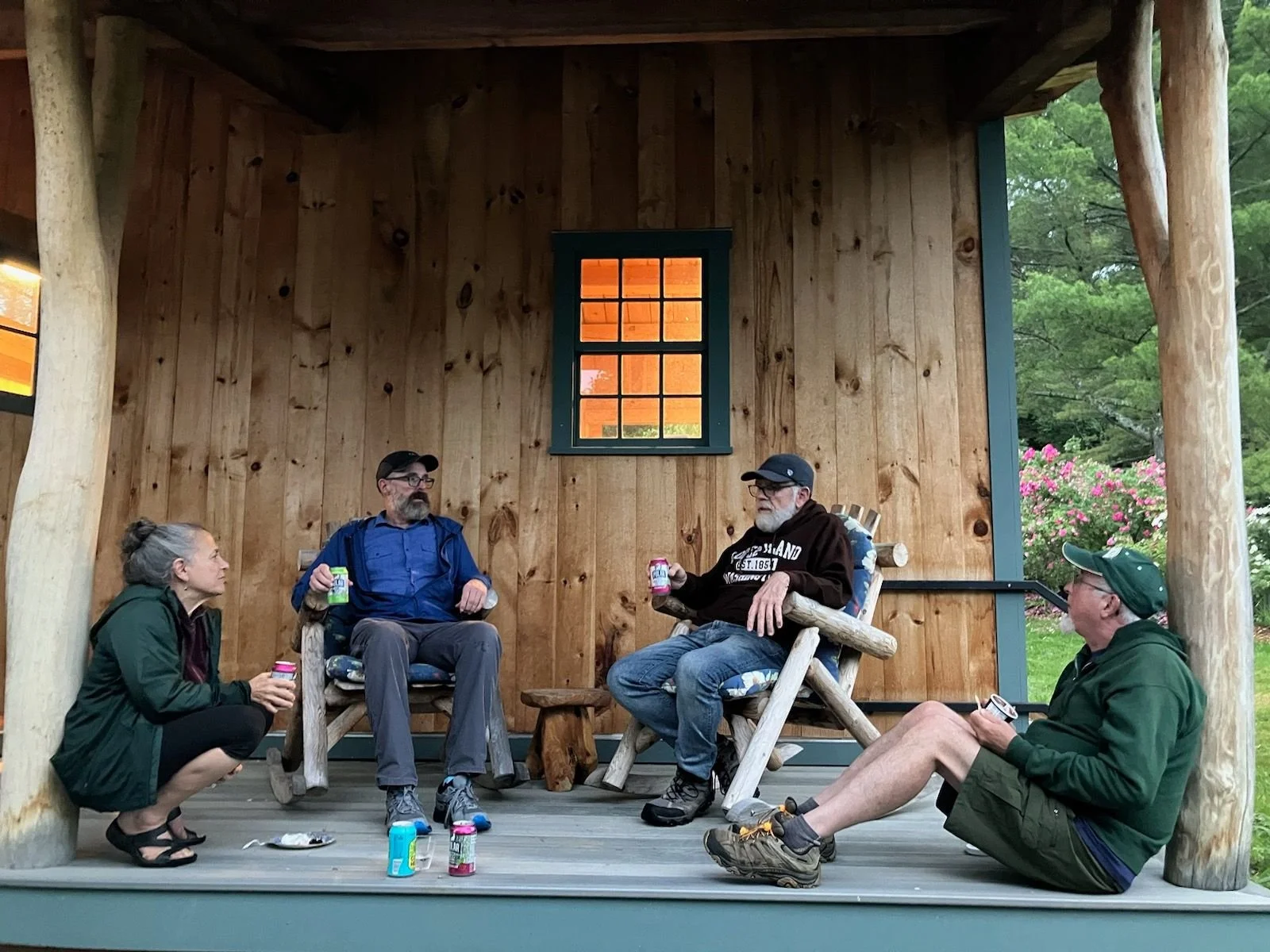
Photo: Sarena, new husband, former husband, former husband’s partner. (not nec. in that order)
Episode 186: Something Beautiful Happened When I Shared My Writing with My Family
Today on our show, we bring you a story by Janet Funk. Janet writes about her experience sharing an essay she wrote with her family prior to submitting for publication to. The essay was about the horrible fourth of July when her brother Robbie drowned and was published in Business Insider on July 3, 2024.
We’ll discuss the age-old-memoir questions: How do we write about and publish stories about the people in our lives?
Janet’s essay was written from a prompt given in First Draft. The prompt was this: Write about Something Beautiful. Janet’s story is called Something Beautiful Happened When I Shared My Writing with My Family
Janet Funk lives in Portland, Oregon with her husband Johnny, two sons and goldendoodle. In her free time she kayaks, hikes and writes. She also works at the best thrift store in town.You can find her writing on her Substack https://janetfunk.substack.com/
Episode 185: Am I Turning into My Mother?
Today on our show, we bring you a story by Bonnie Shor, who we call Blee. Blee’s story asks a question many people can relate to on so many levels, but in Blee’s case, her mother has dementia. Blee elegantly describes her mother and herself. We discuss what makes something universal, the details that drew us in and told us so much about the narrator, and we discuss why the structure she used is so effective. And finally, we talk about endings. This narrator nailed the ending in a huge way.
Blee Shor has been a student of Writing Class Radio for two years. We love the shit out of her. Listen to what she told us: I took up knitting, Zumba and writing when I turned 60. Eight years later, there's a ball of yarn in my closet and four unused Zumba classes on my lost dance card. My writing, though, can be found in several anthologies, most recently, Hellokoo Volume 1 Letter A, Loud Coffee Press Magazine, and now Writing Class Radio. For more Blee, check out her Instagram @Bleeshor.
Episode 184: Just Tell Us How it Went Down
Today on our show, we bring you a story by Alison Colwell. At age 8, Alison was responsible for making sure her mother’s epileptic seizure didn’t kill her. In this essay, Alison takes us to a moment in the hospital where if she’d looked away, her mom might have died. Alison’s essay is an excellent example of hot topic cold prose and is contained in a very short moment. We will go into detail about what we mean by hot topic cold prose and why the tool is so effective. Alison’s essay is called Look Away.
Alison Colwell graduated from the BFA program at UVIC and is now the Executive Director of the Galiano Community Food Program, a charity focused on increasing food security on Galiano Island. She is a single working mother of two children with mental health challenges and a survivor of domestic abuse, all of which inform her creative writing. Alison was recently awarded a Canada Council for the Arts Grant to work on a series of interconnected essays that weave fairy tales with memoir.
Alison Colwell has been published in Rising Tides, Folklife Magazine, The Fieldstone Review, the NonBinary Review, The Fourth River, The Humber Literary Review, The Ocotillo Review, Daily Science Fiction, Flash Fiction Magazine, Crow & Cross Keys, The Drabble, and Tangled Locks Journal and is forthcoming in Two Hawks Quarterly and Hippocampus Magazine.
Episode 183: If You Don’t Want to Know, Don’t Snoop on Your Daughter’s Instagram Account
This episode focuses on how to tell a story out loud. In May 2024, our own Andrea Askowitz made her way to a Moth storytelling competition and for the 15th time (over nine years), dropped her name in the bag. The prompt was snooping. Before she left home, her wife told her to look at this evening, if chosen, as practice instead of assuming this would be her Moth. So, when her name was chosen, Andrea had not memorized a story but instead decided to have fun telling the audience about the time she snooped on her daughter’s Insta account. Did she win at long last? Listen to find out.
In this episode, you will also hear tips on how to hone your story for both the page and the stage.
Andrea Askowitz created Lip Service: True Stories Out Loud, a Knight Foundation Arts Challenge award-winning show. For nine years Lip Service played to audiences 600 strong. Andrea has written for The New York Times, HuffPost, NBC NEWS, Salon, Glamour, The Rumpus, The Writer, PBS, NPR, and more. She's the author of My Miserable, Lonely, Lesbian Pregnancy and editor of Badass. She's our teacher, producer and host.
Episode 182: A Story is Like a Thesis. You Gotta Make Your Point.
Today on our show, we bring you a story by Emma Lathrop, a PhD student at The Center for Ecosystem Science and Society (ECOSS) at Northern Arizona University (NAU). Emma’s story is about proving your value and fighting for your position as a woman in STEM. The best part is when we get a glimpse into how the field would look if Emma were the boss.
This story was originally performed on stage at the Flagstaff Festival of Science in October 2023. Like episode 174, 175, 177, 179, and 180 this was a collaboration with ECOSS, The Center for Ecosystem Science and Society, at Northern Arizona University and Story Collider, a podcast that airs true SCIENCE stories.
Writing Class Radio worked with Dr. Bruce Hungate and Dr. Jane Marks, ecologists and professors at NAU. They have been taking classes with us for about three years. Last year, they were like, Hey, we gotta get our students to personalize their science stories and then they hired us to work with their students online and in person and all of it culminated in a show, which got a standing ovation. Jane and Bruce know that connecting on a personal level will help scientists convey their messages to a broader public and hopefully save the world.
Emma Lathrop is a PhD student at NAU in the Center for Ecosystem Science and Society at Northern Arizona University. Her research focuses on understanding how susceptible carbon in deep soils is to decomposition and emission to the atmosphere as greenhouse gas.
Episode 181: What Do I Do if I Have Nothing Left to Write About?
Today on our show, we bring you a story by our own Allison Langer. Her essay is called My Mom And I Fought For 55 Years. Now Battling My Son Is Making Me Rethink Everything, which was originally published in Huffington Post on May 16, 2023.
In this episode, Allison shows us that you can write about the same thing over and over and you should. It’s the only way to really work out your shit. Listen to the hosts discuss why writing and rewriting is important for your heart and your story.
Allison Langer is a private writing coach, taught memoir writing in prison and has been published in The Washington Post, Mutha Magazine, Scary Mommy, Modern Loss, NextTribe, Business Insider, and HuffPost. Her novel about wrongful conviction and is on the shelf waiting for an agent. These days, she is working on a memoir with her friend and inside student Clifton Jones (2-Tall). Her stories and her voice can be heard on Writing Class Radio, a storytelling podcast she co-produces and co-hosts, which in just eight years has been downloaded more than one million times.
Episode 180: The Forest Raised Me Better than My Father
Today on our show, we bring you a story by Darby Bergl, a PhD student at The Center for Ecosystem Science and Society (ECOSS) at Northern Arizona University (NAU). Her story is about resilience and survival in the face of a volatile father. Darby has a passion for ecology and the study of carbon dynamics in temperate forests, which she interjects into her story.
Darby’s story was originally performed on stage at the Flagstaff Festival of Science in October 2023. This was a Collaboration with ECOSS, Northern Arizona University, and Story Collider, a podcast that airs true science stories. Darby was totally present while telling her story on stage and her delivery was spot on.
Writing Class Radio worked with Dr. Bruce Hungate and Dr. Jane Marks, ecologists and professors at NAU. They have been taking classes with us for about three years. Last year, they were like, Hey, we gotta get our students to personalize their science stories and then they hired us to work with their students online and in person and all of it culminated in a show, which got a standing ovation. Jane and Bruce know that connecting on a personal level will help scientists convey their messages to a broader public and hopefully save the world.
Darby Bergl is a PhD student at NAU in the Center for Ecosystem Science and Society at Northern Arizona University. Darby’s research focuses on the interactions between climate and soil biogeochemistry in terrestrial ecosystems. She is interested in utilizing radiocarbon techniques and modeling approaches to comprehend how C cycling, turnover, and storage will change over time and how this relates to the global C cycle. She plans to use the findings to participate in discussions about the carbon budget in northern hardwood forests with stakeholders, policy advisers, and community members.
Episode 179: How to Use Science to Create an Emotional Connection to Place
Today on our show, we bring you a story by Keven Griffen, a PhD student at The Center for Ecosystem Science and Society (ECOSS) at Northern Arizona University (NAU). Her story uses science to understand an emotional connection to place. She did it by having us fall in love with the place. She set the scene and raised the stakes.
Keven’s story was originally performed on stage at the Flagstaff Festival of Science in October 2023. This was a Collaboration with ECOSS, Northern Arizona University, and Story Collider, a podcast that airs true science stories.
Writing Class Radio worked with Dr. Bruce Hungate and Dr. Jane Marks, ecologists and professors at NAU. They have been taking classes with us for about three years. Last year, they were like, Hey, we gotta get our students to personalize their science stories and then they hired us to work with their students online and in person and all of it culminated in a show, which got a standing ovation. Jane and Bruce know that connecting on a personal level will help scientists convey their messages to a broader public and hopefully save the world.
Keven Griffen is interested in how communities respond to disturbance in extreme environments, and her research is primarily focused on using biological soil crusts for restoration applications, their tolerances for extreme environments, and their responses to global change.
Episode 178: Is it Rape if You Were Blackout Drunk?
Today on our show we bring you a story by Morgan Sutton that embodies everything a story should embody. The story uses no extra words; the narrator looks inside herself; and the story matters to the broader world.
The story is so important because it explains a very dangerous and ugly assumption that is often made about women who’ve been raped. Morgan does it by examining her own situation and her own assumptions. There’s no preaching. And there’s nothing dogmatic. This is what writing and storytelling is all about. Getting to the truth.
Morgan workshopped this story at Writing Class Radio’s annual writing boot camp in Key Largo. She did the work to make the story great. Morgan Sutton is a hospice nurse and kick-ass yoga instructor who lives in Austin, Texas with her husband.
Episode 177: How to See Beauty in Small Things
Today on our show, we bring you a story by Jasmine Anenberg, a PhD student at The Center for Ecosystem Science and Society (ECOSS) at Northern Arizona University (NAU). Jasmine’s story is about losing a friend but gaining something he taught her, which is seeing the beauty in small things. She takes this lesson into her fieldwork as she studies mosses in dirt.
Her story was originally performed on stage at the Flagstaff Festival of Science in October 2023. This was a Collaboration with ECOSS, Northern Arizona University, and Story Collider, a podcast that airs true science stories. Jasmine was totally present while telling her story on stage and her delivery was spot on.
We worked with Dr. Bruce Hungate and Dr. Jane Marks, ecologists and professors at NAU. They have been taking classes with us for about three years. Last year, they were like, Hey, we gotta get our students to personalize their science stories and hired us to work with their students. We did that online and in person and all of it culminated in a show, which got a standing ovation. Jane and Bruce know that connecting on a personal level will help scientists convey their messages to a broader public and hopefully save the world.
Episode 176: Flying Home or Someplace Better
Today on our show, we bring you a story by Jennifer Byrne, who conjures the courage to leave her husband after she's faced with removing a bird that flew into her house. Her story is an excellent example of using a book-end structure.
Jennifer has been published in the New York Times (Tiny Love Stories), The Cut, Psychology Today, Good Housekeeping, Atlas Obscura, McSweeney's Internet Tendency, The New Yorker Daily Shouts and The Guardian. She lives in New Jersey.
Episode 175: Fighting Fire with Aspen and Birch
Today on our show, we bring you a story by Nick Link, a PhD student in the Mack Lab and part of the Center for Ecosystem Science and Society (ECOSS) at Northern Arizona University. His story was originally performed on stage at the Flagstaff Festival of Science in October 2023. This was a Collaboration with ECOSS, Northern Arizona University, and Story Collider, a podcast that airs true science stories.
We worked with Dr. Bruce Hungate and Dr. Jane Marks, ecologists and professors at NAU. They have been taking classes with us for about three years. Last year, they were like, Hey, we gotta get our students to personalize their science stories and hired us to work with their students. We did that online and in person and all of it culminated in a show, which got a standing ovation. Jane and Bruce know that connecting on a personal level will help scientists convey their messages to a broader public and hopefully save the world.
Nick’s story takes a personal experience that has been burned into his memory. As an undergraduate student, he and his housemates almost burned down the neighborhood when they got rid of their Christmas trees. This experience led him to his work today, building natural fire breaks in the forest of Alaska.
Episode 174: For the Love of Science
Today on our show, we bring you a story that was originally performed on stage at the Flagstaff Festival of Science in October 2023. This was a Collaboration with The Center for Ecosystem Science and Society (ECOSS) at Northern Arizona University (NAU) and Story Collider, a podcast that airs true science stories.
We worked with our narrator of today’s story Dr. Bruce Hungate and Dr. Jane Marks, a conservation ecologist and professor at NAU, who happens to be married to Bruce. They have been taking classes with us for about three years. Last year, they were like, Hey, we gotta get our students to personalize their science stories and hired us to work with their students. We did that online and in person and all of it culminated in a live show, which got a standing ovation. Jane and Bruce know that connecting on a personal level will help scientists convey their messages to a broader public and hopefully save the world.
Bruce Hungate’s story is a love story. It’s about his love for his wife, Jane, as well as his love for science and nature. His story is a great lesson on how to sneak science into a story.
Bruce Hungate is a professor and director of ECOSS at Northern Arizona University. Bruce conducts research on ecosystems and how they respond to and shape environmental change. He trains future scientists and communicates the relevance of science to people around the world.
Episode 173: Birds Will Be Birds
Today on our show, we bring you a story by Christopher Blackwell. Chris is 42 and serving a 45-year prison sentence in Washington. Chris’s story came to us through writer and Chris’s mentor, Jamie Beth Cohen.
This episode is about taking a small moment and bringing big meaning. Through details and emotion, Chris tells us so much about himself and his surroundings. When birds nest on the windowsill of the prison, all the men gather round. Their usual differences melt away. When the birds fly away, our narrator understands their lust for freedom.
Christopher Blackwell co-founded Look 2 Justice, an organization that provides civic education to system-impacted communities and actively works to pass sentence and policy reform legislation. He is currently writing a book about solitary confinement. His writing has been published in The New York Times, The Washington Post, The Boston Globe, Huffington Post, and many other outlets. He is a contributing writer at Jewish Currents, a contributing editor at The Appeal, and works closely with the prison writing program Empowerment Avenue. You can follow him on X @chriswblackwell.
Chris’s story was originally published in The Appeal, which is a nonprofit news organization that envisions a world in which systems of support and care, not punishment, create public safety.
Episode 172: How to Start a New Job
Today on our show, we bring you a story by Sumitra Mattai. Her story is a really interesting example of how to change-up structure. It’s literally a list with soooooo many details that reveal so much about her. Through the list, we discover what the story is about, which is that despite insecurity, this narrator pushes on one day at a time.
Sumitra Mattai is a writer and textile designer based in New York City. She holds a BFA in Textile Design from the Rhode Island School of Design and an MFA in Creative Writing from The New School. Her essays on family, food and culture have been published widely. For more information, visit her website www.sumitramattai.com, Instagram @sumitramattai, or subscribe to her newsletter, "Clothbound," highlighting textiles in art, design and everyday life.
Episode 171: Can You Find Humor in Addiction?
Today on our show, we bring you a story by Maxine Poupko, a semi-retired nurse, long-time student of Writing Class Radio, and hilarious person. Maxine is a master at writing humor and writing the truth. Of course someone can learn the craft of writing, but there might be some debate about whether you can learn to write the truth. Maxine shows us it's possible. She's been writing with Writing Class Radio for the last five years and we have seen her writing transform. At first her writing stayed on the surface. Today, she brings out the vulnerable, hard truth in her very first draft. You will hear her story, Whipped Cream, which will have you laughing all the way through.
For more Maxine, listen to Episode 158: Our Dead Mom Brings My Sister and Me Together.
Maxine Poupko is a writer, a registered nurse, and a health advocate. She teaches writing workshops at the International Women’s Writing Guild summer conferences. Her stories have been published in The Sun and the book, A Waist is a Terrible Thing to Mind, by Jan Phillips. Maxine is a student of Writing Class Radio, which she says is her favorite thing to do.